We earn commissions from some links on this page — it never changes our verdicts or what you pay. How we review →
Best State to Form an LLC: The Honest Answer (Usually Not Wyoming)
The short answer: For most US-based business owners, the best state to form an LLC is your home state — the state where you live and do business. Forming in Wyoming, Delaware, or Nevada when you live in Texas, California, or New York almost always costs you more, not less.
That’s the answer most competitors won’t give you because it doesn’t sell Wyoming packages. We’ll explain exactly why, when the “magic state” strategy actually does work, and the gotchas that can blindside you in specific states.
Jump to: Why your home state wins · The foreign-LLC double-fee trap · State gotchas · When WY/DE/NV actually make sense · Decision flowchart · 50-state table · FAQ
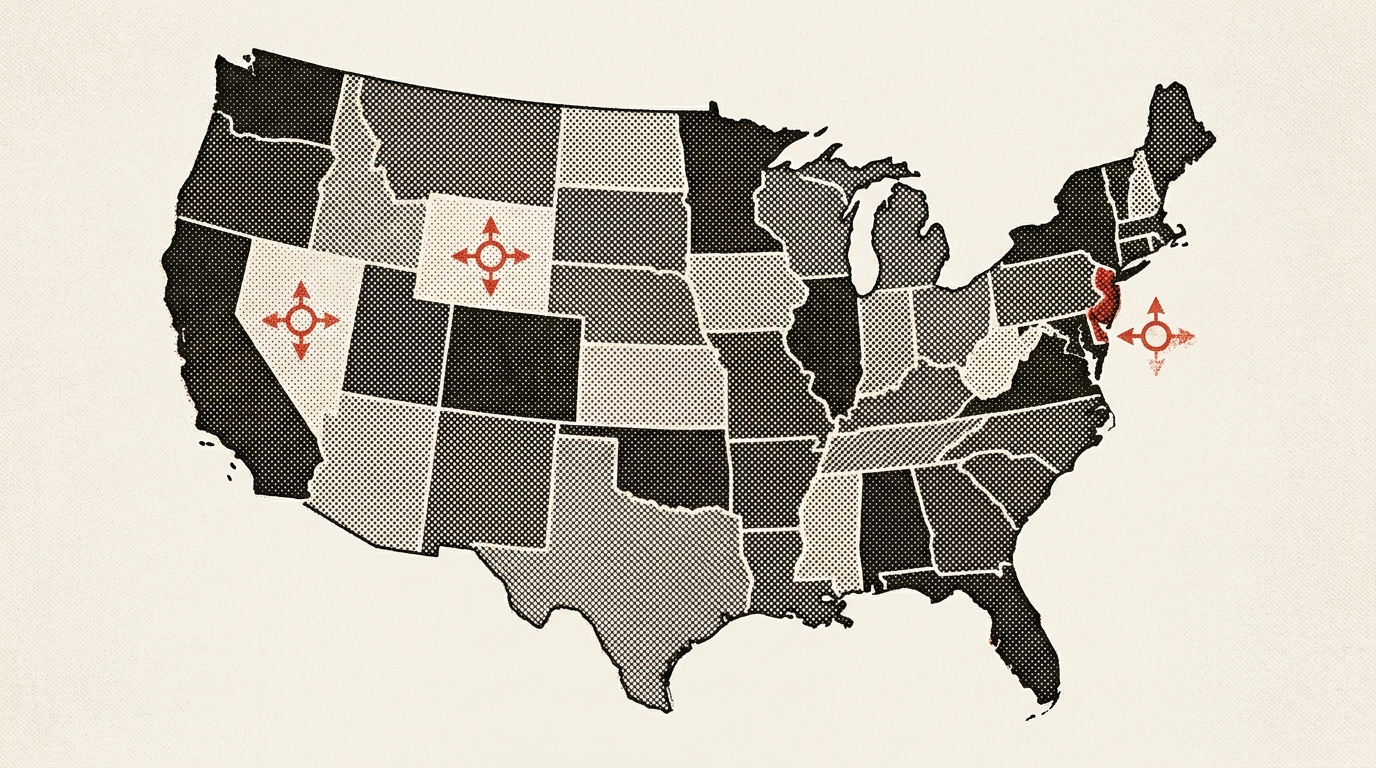
The “Magic State” Myth
Spend five minutes on any LLC formation service’s website and you’ll see it: “Form in Wyoming — no income tax! No state LLC tax! Privacy!” The pitch sounds compelling. The reality, for most people, is a more expensive mess.
Here’s what those pitches omit: if you live and operate in Ohio, you don’t get to choose Ohio’s rules just because you filed in Wyoming. Your business activity is in Ohio. Ohio still wants its registration fee, its annual report, and its taxes. Wyoming just adds another layer of fees on top.
This is the foreign LLC trap — and it catches thousands of founders every year.
Why Your Home State Is Almost Always the Right Answer
You only pay one state
When you form an LLC in your home state, you register once and you’re done. One filing fee. One registered agent fee. One annual report. That’s it.
When you form in Wyoming but live in Texas (for example), you need to:
1. Register as a domestic Wyoming LLC (Wyoming filing fee + Wyoming registered agent fee)
2. Register as a foreign LLC in Texas (Texas filing fee + Texas registered agent fee + Texas annual report)
You’ve just doubled your overhead — permanently. Every year.
“Nexus” follows your activity, not your filing state
This is the core misunderstanding. Your tax obligations are determined by where you have nexus — where you have employees, physical presence, inventory, or conduct business. Filing in Wyoming does not move your nexus to Wyoming. If you sell to California customers from your home office in California, California will tax your California business regardless of where the LLC paperwork says.
State courts apply your home state’s law
In a lawsuit, courts apply the law of the state where the business activity occurred. A Wyoming operating agreement doesn’t insulate you from California court interpretations of California law.
The Foreign LLC Double-Fee Trap
Let’s put real numbers to this. Say you live in Texas and someone told you to form in Wyoming to “avoid Texas taxes.” (Texas has no personal income tax to begin with, so this is particularly misguided, but the math holds elsewhere.)
Year 1 costs — Wyoming domestic only:
– Wyoming filing fee: $100 (verify current fee)
– Wyoming registered agent: ~$50–125/year
– Total Wyoming cost: ~$150–225
But you still need Texas:
– Texas foreign LLC registration: $750
– Texas registered agent: ~$50–125/year
– Texas Franchise Tax report (due annually)
– Total Texas foreign LLC add-on: ~$800–875
Real year-1 cost of the “Wyoming saves money” strategy: ~$950–1,100+
Compare that to simply forming in Texas:
– Texas LLC filing fee: $300
– Texas registered agent: ~$50–125/year
– Total Texas domestic: ~$350–425
The “cheap” Wyoming route costs nearly 3× as much in year 1, and the gap compounds annually.
State-specific note: Some states (like California and New York) have unavoidable fees regardless of formation state. We cover those below under State Gotchas. Even there, forming in-state is still usually cheaper.
State Gotchas: What Nobody Tells You Until It’s Too Late
New York: The Publication Requirement ($300–$1,750+)
New York has a unique (and frankly punishing) rule: every new LLC must publish notice of its formation in two newspapers designated by the county clerk for six consecutive weeks. Then you must file a Certificate of Publication with the state.
The cost varies wildly by county:
– Albany or smaller upstate counties: ~$300–500
– Nassau or Suffolk County: ~$800–1,200
– New York County (Manhattan) or neighboring boroughs: up to $1,750 or more
This is not optional. Failure to complete publication within 120 days of formation results in suspension of your LLC’s ability to sue or be sued in New York courts — meaning you can’t enforce contracts.
If you form in Wyoming to “avoid” NY publication: You still have to comply once you register as a foreign LLC doing business in New York. There’s no escape hatch.
California: The $800 Minimum Franchise Tax
California charges every LLC — domestic or foreign — a minimum annual franchise tax of $800, regardless of whether the LLC made any money. This is separate from the filing fee and due every year, starting the first taxable year.
Additionally, California charges an LLC Fee based on gross receipts:
– $0–$249,999: no additional fee
– $250,000–$499,999: $900
– $500,000–$999,999: $2,500
– $1M+: $6,000
If you do business in California, you pay these fees. Full stop. Forming elsewhere doesn’t help.
Exception: As of 2021, California waived the $800 first-year minimum franchise tax for LLCs formed in calendar year 2021 through 2023 (verify current rules — this provision has changed). Check current California FTB guidance.
Massachusetts: Annual Report Fee
Massachusetts charges an annual report fee of $500 for LLCs (verify current fee) — one of the higher recurring state fees. Understand this before you form here.
Other states to double-check before forming:
- Nevada: Annual list fee + state business license fee (~$500+/year, verify) often negates the “Nevada advantage”
- Delaware: Annual “Registered Agent Tax” plus filing fee; fine for corporations, less clear for small LLCs
- Rhode Island, New Hampshire, Maine: Each have specific filing quirks worth confirming
When Wyoming, Delaware, and Nevada Actually Make Sense
These states have genuine advantages — just not for the majority of US-based small business owners. Here’s who actually benefits:
Wyoming: Non-US founders, privacy, holding companies
Wyoming makes sense if:
– You’re a non-US resident with no physical US presence (no nexus means no foreign LLC problem)
– You’re creating a holding company or intellectual property holding entity that itself doesn’t conduct operations
– You need maximum charging order protection (Wyoming’s statute is notably strong) for asset protection structures
– You want lifetime proxy and anonymous ownership features (no public member listings)
Wyoming’s LLC act is genuinely well-designed. It’s just not magical for the Texas consultant who thinks they’re dodging taxes.
For non-US founders specifically: see our dedicated guide at /non-us-llc/ — Wyoming and Delaware are both strong options, and your choice depends on banking needs, tax treaty considerations, and whether you need a US agent.
Delaware: VC-track companies, future C-corps
Delaware makes sense if:
– You plan to raise venture capital — VCs almost universally require Delaware C-corps, and a Delaware LLC is an easier conversion path
– You want the Court of Chancery (no juries in business disputes, highly predictable precedent)
– You’re building a company you intend to sell, and acquirers will do Delaware diligence
For a solo freelancer, a side hustle, or an e-commerce store: Delaware adds cost and complexity with no tangible benefit.
Nevada: A narrower use case than marketed
Nevada is heavily marketed as a privacy/tax haven. The practical reality:
– Nevada has no state income tax — but you still owe income tax in your home state on income earned there
– Nevada’s annual fees are substantial
– Nevada privacy protections are real but Wyoming is equally strong and often cheaper
– The IRS has Nevada in its sights for abuse of nominee structures
Nevada makes the most sense for Nevada-based businesses or specific asset protection structures designed by an attorney — not as a generic tax hack.
Decision Flowchart: Which State Should You Choose?
Use this to find your answer in under 2 minutes:
Do you live and operate in the US?
│
├── YES → Do you conduct most/all business in one state?
│         ├── YES → Form in that state. You're done.
│         └── NO (multiple states) → Form in your primary state of operations.
│                                    Register as foreign LLC in others as needed.
│
└── NO (non-US resident) → Do you have US customers or employees?
                           ├── YES → See /non-us-llc/ → Wyoming or Delaware recommended
                           └── NO (purely international) → Wyoming or Delaware
                               Consult tax attorney on ETBUS rules
Special cases:
– Raising VC? → Delaware (talk to a startup attorney)
– Real estate investing? → State where property is located
– Holding company / IP holding? → Wyoming or Delaware; attorney consult advised
50-State Quick Reference Table
This table summarizes key LLC formation costs per state. All fees should be verified at your state’s Secretary of State website before filing — fees change frequently.
| State | Filing Fee | Annual Report Fee | Notable Gotcha | Verdict |
|---|---|---|---|---|
| Alabama | $200 | $50/yr | — | Form here if based here |
| Alaska | $250 | $100 biennial | — | Form here if based here |
| Arizona | $50 | No annual report | No publication req. | Form here if based here |
| Arkansas | $45 | $150/yr | — | Form here if based here |
| California | $70 | $800/yr minimum franchise tax + annual report | $800/yr minimum | Form here if based here; budget for $800/yr |
| Colorado | $50 | $10/yr | — | Form here if based here |
| Connecticut | $120 | $80/yr | — | Form here if based here |
| Delaware | $110 | $300/yr registered agent + annual tax | Designed for corps, not small LLCs | VC-track or holding cos only |
| Florida | $125 | $138.75/yr | — | Form here if based here |
| Georgia | $100 | $50/yr | — | Form here if based here |
| Hawaii | $50 | $15/yr | — | Form here if based here |
| Idaho | $100 | $0 annual report | — | Form here if based here |
| Illinois | $150 | $75/yr | — | Form here if based here |
| Indiana | $95 | $31/yr | — | Form here if based here |
| Iowa | $50 | $30 biennial | — | Form here if based here |
| Kansas | $160 | $55/yr | — | Form here if based here |
| Kentucky | $40 | $15/yr | Low fees; good option if based here | Form here if based here |
| Louisiana | $100 | $30/yr | — | Form here if based here |
| Maine | $175 | $85/yr | — | Form here if based here |
| Maryland | $100 | $300/yr | — | Form here if based here |
| Massachusetts | $500 | $500/yr | High recurring fee | Form here if based here; budget accordingly |
| Michigan | $50 | $25/yr | — | Form here if based here |
| Minnesota | $155 | $0 annual report | — | Form here if based here |
| Mississippi | $50 | $0 annual report | — | Form here if based here |
| Missouri | $50 | $0 annual report | — | Form here if based here |
| Montana | $70 | $20/yr | — | Form here if based here |
| Nebraska | $100 | $26/yr biennial | — | Form here if based here |
| Nevada | $75 | ~$500+/yr state business license + annual list | High recurring fees; marketed more than earned | Nevada residents/specific structures only |
| New Hampshire | $100 | $100/yr | — | Form here if based here |
| New Jersey | $125 | $75/yr | — | Form here if based here |
| New Mexico | $50 | No annual report | No public member listing | Form here if based here; strong privacy |
| New York | $200 | $9/yr biennial | Publication req. $300–$1,750 | Form here if based here; budget for publication |
| North Carolina | $125 | $200/yr | — | Form here if based here |
| North Dakota | $135 | $50/yr | — | Form here if based here |
| Ohio | $99 | $0 annual report | — | Form here if based here |
| Oklahoma | $100 | $25/yr | — | Form here if based here |
| Oregon | $100 | $100/yr | — | Form here if based here |
| Pennsylvania | $125 | $7/yr decennial | — | Form here if based here |
| Rhode Island | $150 | $50/yr | — | Form here if based here |
| South Carolina | $110 | No annual report | — | Form here if based here |
| South Dakota | $150 | $50/yr | — | Form here if based here |
| Tennessee | $300 | $300/yr minimum | High fee | Form here if based here |
| Texas | $300 | $0 annual report; franchise tax may apply | No state income tax | Form here if based here |
| Utah | $54 | $18/yr | — | Form here if based here |
| Vermont | $125 | $35/yr | — | Form here if based here |
| Virginia | $100 | $50/yr | — | Form here if based here |
| Washington | $200 | $60/yr | — | Form here if based here |
| West Virginia | $100 | $25/yr | — | Form here if based here |
| Wisconsin | $130 | $25/yr | — | Form here if based here |
| Wyoming | $100 | $60 minimum/yr | Best for non-US founders; double fees if you live elsewhere | Non-US/holding cos only |
Important: All fees marked “” should be confirmed at your state’s official Secretary of State website before filing. State fees change frequently and the above is for orientation only.
The Complete True-Cost Picture: Year 1 vs. Year 2
Most people focus only on the formation fee. The real number is:
True LLC cost = Formation fee + State filing fee + Registered agent (year 1 included by some services) + Year 2 registered agent renewal + Year 2 annual report
For a typical home-state formation using Northwest Registered Agent:
– Northwest fee: $39
– State filing fee: varies (e.g., ~$50–200)
– Year 1 registered agent: included in Northwest’s $39 first year (renews at $125/yr)
– Year 2 registered agent: $125
– Annual report filing: varies by state
See our full true-cost analysis and our best LLC services comparison for per-service year-1 and year-2 breakdowns.
Our Recommended Formation Service for Most States
For most home-state formations, we recommend Northwest Registered Agent (Verdict Score: 9.2/10).
Northwest charges $39 + your state fee — and unlike competitors, they include the first year of registered agent service in that price, answer the phone with a real human, and don’t push you through a $399 upsell tunnel during checkout.
→ Form Your LLC with Northwest (we earn $150 when you use this link — disclosed because it’s the right thing to do)
For non-US residents forming in Wyoming or Delaware: See /non-us-llc/ — different services (Firstbase, doola) specialize in international formation and are better equipped for EIN and banking setup.
Frequently Asked Questions
Is Wyoming the best state to form an LLC?
For most US residents, no. Wyoming is best for non-US residents with no US physical presence, for holding companies, or for asset protection structures. If you live in Wisconsin and form a Wyoming LLC, you still have to register as a foreign LLC in Wisconsin — doubling your fees every year.
Does it matter what state I form my LLC in for taxes?
Your tax obligations are determined by where you conduct business (nexus), not where you filed. A Wyoming LLC owned by a California resident who does business in California still owes California state taxes. State of formation does not determine state of taxation for most single-member LLCs.
What is the cheapest state to form an LLC?
By filing fee alone, states like Kentucky ($40), Colorado ($50), Iowa ($50), and Ohio ($99) are among the least expensive. But the “cheapest state” question should factor in annual recurring fees, not just the formation fee. See our /cheapest-llc-formation/ guide.
Do I need a registered agent in the state I form my LLC in?
Yes. Every LLC must designate a registered agent — a physical address in the formation state — to receive legal documents. If you form in Wyoming but live in Ohio, you need a Wyoming registered agent. If you also register as a foreign LLC in Ohio, you need an Ohio registered agent too.
Should I form my LLC in Delaware or Wyoming?
If you’re raising venture capital or building toward an exit: Delaware, and consider a Delaware C-Corp. If you’re a non-US founder or creating a holding company: Wyoming. If you’re a regular US-based business owner: neither — form in your home state.
What is the foreign LLC double-fee trap?
When you form an LLC in one state but conduct business in another, you must register as a foreign LLC in your operating state. That means two sets of filing fees, two registered agent fees, and two annual report obligations — every year. Most solo founders end up paying more than if they’d simply formed in their home state.
Can I change my LLC’s state of formation later?
Yes, but it’s a process. Options include domestication (converting to a domestic LLC in the new state, where available), or dissolving the old LLC and forming a new one. It’s manageable but requires attention to detail. Avoid the need by forming in the right state from day one.
What is the NY LLC publication requirement?
New York requires new LLCs to publish notice of formation in two county-designated newspapers for six consecutive weeks, then file a Certificate of Publication with the state. Cost ranges from ~$300 in rural counties to $1,750+ in Manhattan. This requirement applies to both domestic NY LLCs and foreign LLCs registering to do business in New York.
Does California’s $800 franchise tax apply to my Wyoming LLC?
Yes, if your Wyoming LLC is doing business in California. “Doing business” in California triggers the $800 minimum franchise tax and the LLC fee based on gross receipts. Forming elsewhere does not exempt you from California’s reach if you operate there.
Home → LLC Formation → Best State to Form an LLC